Introduction
Many people want a brighter smile, so teeth whitening is a popular choice. However, you may wonder if professional or at-home teeth whitening is safer. Both options promise whiter teeth, but their safety and results can differ. In this blog, we will compare professional and at-home teeth whitening methods. We will focus on safety, benefits, and risks. This way, you can make an informed decision for your smile.
What is Teeth Whitening?
Teeth whitening is a process that makes your teeth look whiter. It works by removing stains or lightening the color of your teeth. Usually, stains come from foods, drinks, smoking, or aging. There are many ways to whiten teeth, but not all are equally safe. Some methods use special gels, strips, or lights. Others use toothpaste or rinses. It is important to know which options are safe teeth whitening choices.
Professional Teeth Whitening: Methods, Benefits, and Risks
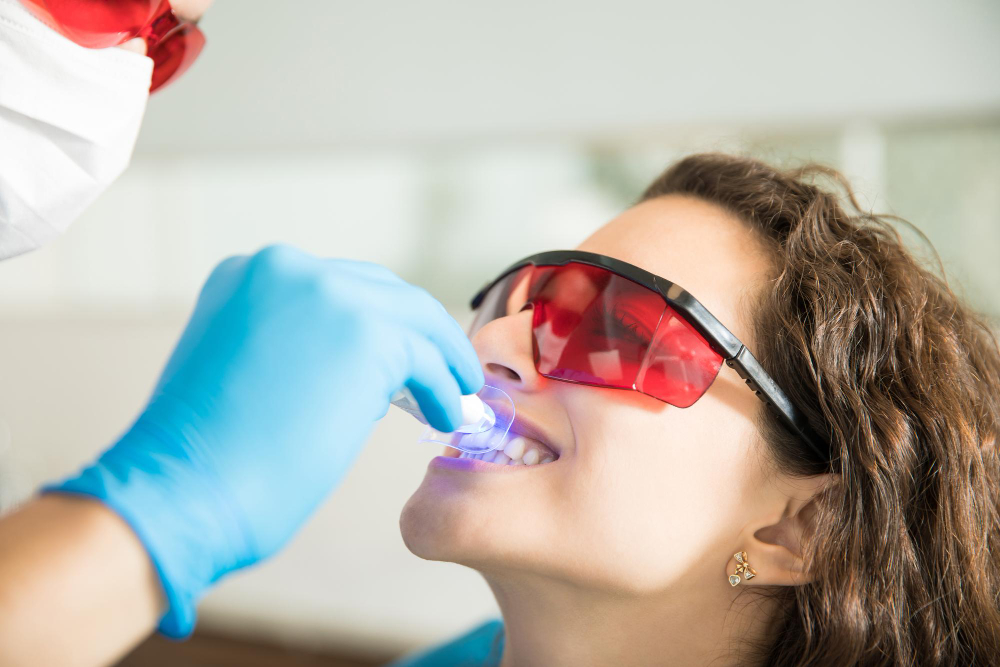
Professional teeth whitening is done by a dentist. Dentists use stronger whitening agents than over-the-counter products. Often, they use a gel with hydrogen peroxide or carbamide peroxide. Sometimes, they use a special light to speed up the process.
According to the American Dental Association (ADA), professional whitening is safe when done by a trained dentist. Dentists can also check for problems before starting treatment. This helps lower the risk of side effects.
At-Home Teeth Whitening: Methods, Benefits, and Risks
At-home teeth whitening uses products you can buy at a store or online. These include whitening strips, gels, trays, toothpaste, and rinses. Some kits use lower levels of peroxide than those used by dentists.
However, the ADA warns that not all at-home whitening products are safe. Some may not work well or could harm your teeth and gums if used too often. Always look for products with the ADA Seal of Acceptance.
Comparing Safety: Professional vs. At-Home Whitening
When it comes to safety, professional teeth whitening is usually safer than at-home options. Dentists use safe teeth whitening options and monitor your progress. They can also adjust the treatment if you have side effects.
On the other hand, at-home whitening risks include using too much product or not following instructions. This can lead to tooth sensitivity or gum problems. While some at-home kits are safe, they may not give even results. In addition, overuse can damage your tooth enamel.
For most people, professional teeth whitening safety is higher. But, safe at-home whitening is possible if you use trusted products and follow directions.
Tips for Safe Teeth Whitening
To keep your teeth and gums healthy, follow these tips for safe teeth whitening:
By following these steps, you can lower the risk of side effects. Moreover, you will help keep your smile bright and healthy.
When to Consult a Dentist
It is important to talk to a dentist before starting any teeth whitening treatment. For example, if you have sensitive teeth, gum disease, or dental work like crowns, a dentist can guide you. They will help you choose the safest teeth whitening method for your needs. Additionally, if you notice pain, swelling, or lasting sensitivity, stop whitening and see your dentist right away.
In summary, both professional and at-home teeth whitening can work. However, professional whitening is usually safer and more effective. Always consult Dr. Sonica Raju, a dental professional, to choose the safest teeth whitening method for you.